The line
Seven stations, in order.
This is our line, station by station: what happens to the water, what is checked, and what we do at our plant near Bengaluru.
-
Water arrives, then settles.
- What happens
- Water from the source is drawn and left to stand, so that heavier sediment drops out before anything finer is tried. Settling, called decantation, is the oldest treatment there is.
- What is checked
- Clarity and colour on arrival.
- OnyxAura
- Water from our Himalayan springs, run by gravity into closed tanks at the source and logged batch by batch before it reaches the plant.
-
Coarse to fine.
- What happens
- Sand, activated carbon and cartridge filters take out sediment, and whatever would colour the water or give it a taste or a smell.
- What is checked
- Clarity, taste and smell after the stage.
- OnyxAura
- Sand, then activated carbon, then micron cartridges down to 5 µm and finer.
-
Fine enough to stop salts.
- What happens
- Membrane filters and reverse osmosis remove fine particles and most of the dissolved salts. What is left is very low in minerals.
- What is checked
- Total dissolved solids, known as TDS, which fall sharply at this station.
- OnyxAura
- Reverse osmosis, with TDS read before and after the membrane on every run.
-
What was removed is measured back in.
- What happens
- Minerals are measured back in to a set profile, with food-grade mineral salts. Calcium brings a faint sweetness, magnesium a rounder feel in the mouth.
- What is checked
- TDS and pH, against the specification for each piece.
- OnyxAura
- Each water is balanced to its own profile: Gold 50 to 100 ppm, Incline 80 to 120, Himalayan 150 to 250, Black Water 200 to 300. Every target is on its page.
-
Ozone, then light.
- What happens
- Ozone is bubbled through the water and breaks down within minutes, back to oxygen. Ultraviolet light at 254 nanometres then damages the DNA of anything that remains, so it cannot multiply. Nothing is heated, and nothing is left behind.
- What is checked
- Microbiology, in a laboratory.
- OnyxAura
- Both, in that order: ozonation, then ultraviolet light.
-
Rinsed, filled, closed.
- What happens
- Containers are rinsed, filled and closed straight away. A can is filled open, and its lid is fitted after, by a double seam.
- What is checked
- The fill volume, and that every closure is sound.
- OnyxAura
- Filled cold, in a classified clean room. Glass closes with a screw cap and tamper band, Black Water with its swing-top, cans with a double seam. The quality team checks fill, torque and seal on every run.
-
Numbered, tested, then released.
- What happens
- A code goes on every pack: a batch or lot number and a date. Samples are tested, and a batch is released once its results are in.
- What is checked
- That the code reads, and that the batch’s results are on file.
- OnyxAura
- A laser-marked batch and lot code on every bottle and can. pH every four hours, TDS every batch, and a full panel each month at an accredited laboratory. The report is yours on request.
Chapter V · The Room
One room. Closed to everything else.
A room is judged by what it keeps out. Ours is a classified clean room, in our plant near Kempegowda International Airport, Bengaluru. Only the quality team works inside, and the pipes and fillers are cleaned in place before every run.
- Class
- ISO 9
- Particles of 0.5 µm or larger, per cubic metre, at most
- 35,200,000
- In practice
Classes count particles only. Water also needs control of microorganisms, which is tested separately.
Chapter VI · The Vessel
The bottle is made to be kept.
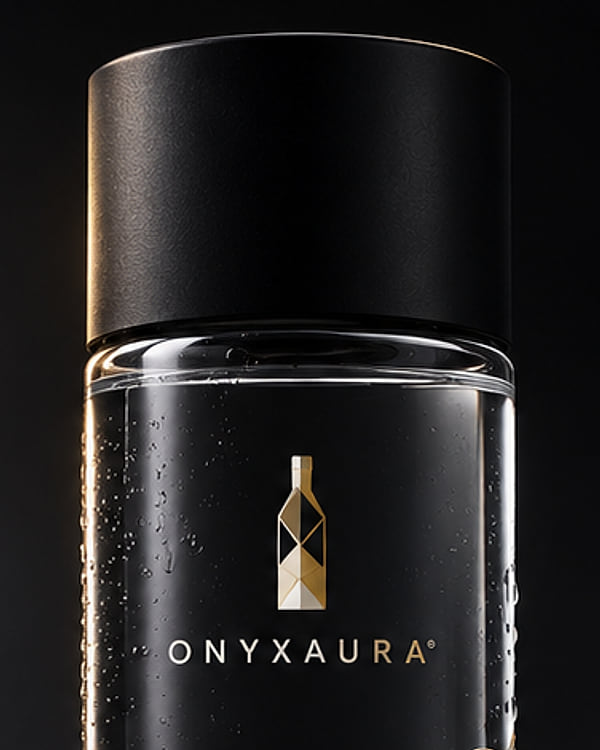
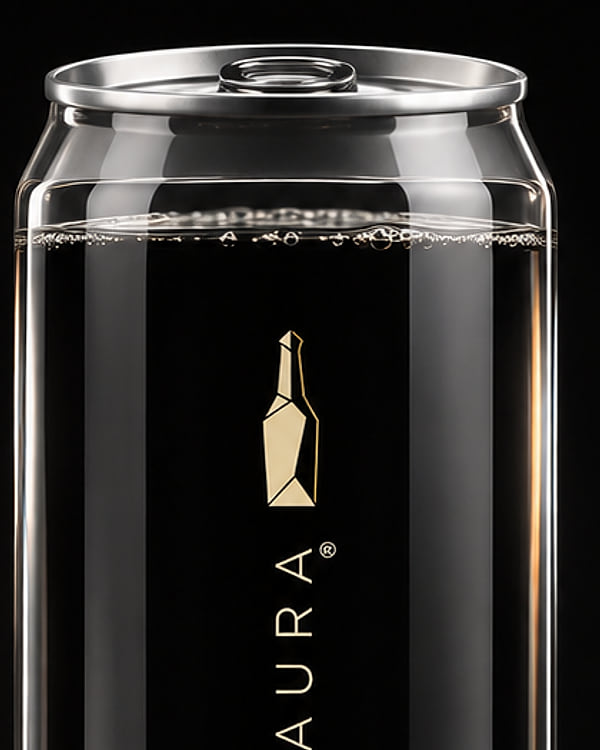
Glass for the table, a clear can for everywhere else. Incline stands in a tall, straight-sided bottle under a matte black cap; Black Water comes in a swing-top bottle with a stopper and wire bail; Himalayan and Black Water also come in a clear 500 ml can with an aluminium lid.
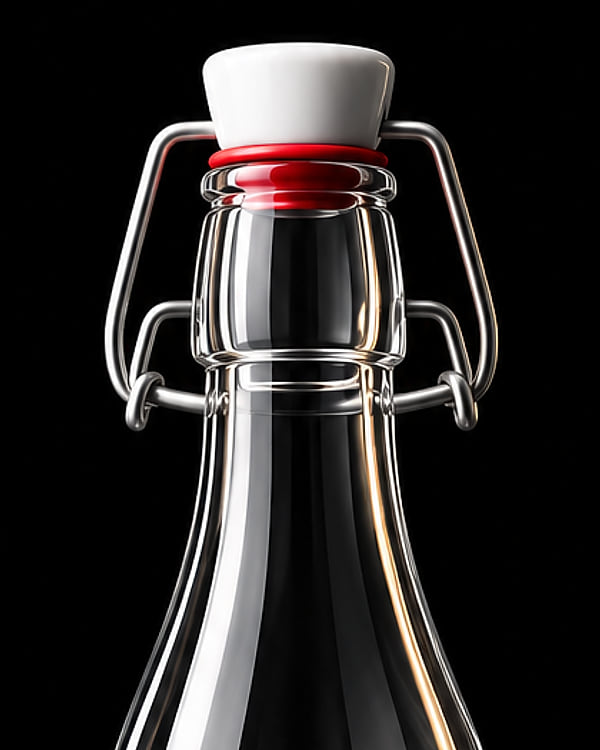
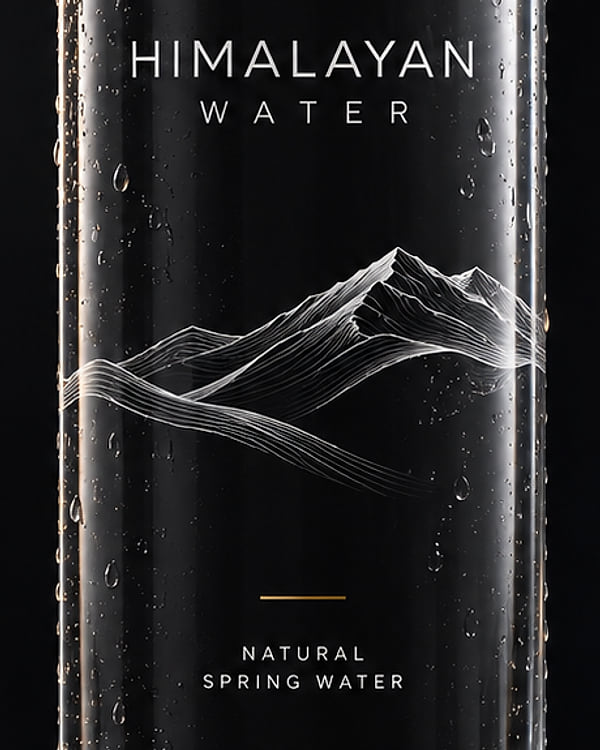
Glass can be recycled again and again without losing quality. So can aluminium: about three quarters of all the aluminium ever produced is still in use today.
Chapter VII · The Seal
Closed once, and checked.
A can is closed by rolling its aluminium lid onto the body in one tight joint. A glass bottle is closed by its cap, with a tamper band that breaks the first time it is opened. Our quality team checks the torque of every cap and the seal of every can, by eye and by leak test.
Seam quality is a recognised point of care in canning, because the whole can depends on one joint being airtight.
Chapter VIII · The Record
Every pack carries a code.
A laser marks a batch and lot code on every bottle and every can. The record behind it holds the water’s source, the date, and its measured pH, TDS, minerals and microbiology. We keep it, and the report is yours on request.
A laser code is indelible: it cannot be rubbed or smudged away. That is why it is the usual way to mark a can with a date and a trace.
The tests
What we test, and how often.
Nothing leaves the plant on trust. Every batch is measured on the line, sampled, and recorded; a fuller panel is run every month at an accredited laboratory.
Every batch
Colour, odour, taste and clarity, then pH and total dissolved solids, against the profile of that water.
Every four hours on the line
pH, read again while the line runs, so any drift is caught within the batch.
Before release
Microbiology: coliforms and a plate count. A batch is released only when its results are in.
Every month
A full panel at an accredited laboratory: the microbiology again, and heavy metals such as lead, with nitrate and barium.
Every pack
Fill volume, cap torque or seam, and a readable batch and lot code.
Shelf life
18 to 24 months, stored cool, dry and out of the sun, so the glass stays clear and the labels intact.
Sources
General facts on this page come from the sources below. Our own process is stated as ours.
- UC Berkeley: The basics of ultraviolet disinfectionWhy 254 nm, and what it does to DNA
- Water & Wastes Digest: Ozone for bottled waterHow ozone disinfects, and how quickly it returns to oxygen
- Health Canada: Total dissolved solidsHow dissolved solids shape the taste of water
- O.Berk: Sand to Soda Bottle, an overview of glass manufacturingMelting, gobs, forming, annealing, inspection
- BCG: A circular future for glassGlass, recycled again and again
- International Aluminium Institute: 75% of all aluminium ever produced is still in useAluminium, recycled with its properties unchanged
- US patent 6,561,004: Can lid closureThe sealing compound in the seam
- Domino: Coding for beverage cansLaser codes, dates and traceability
- Schilling Engineering: ISO 14644-1The particle limits for each cleanroom class